Rothen: A Case Study in Urban Renewal and Cultural Preservation
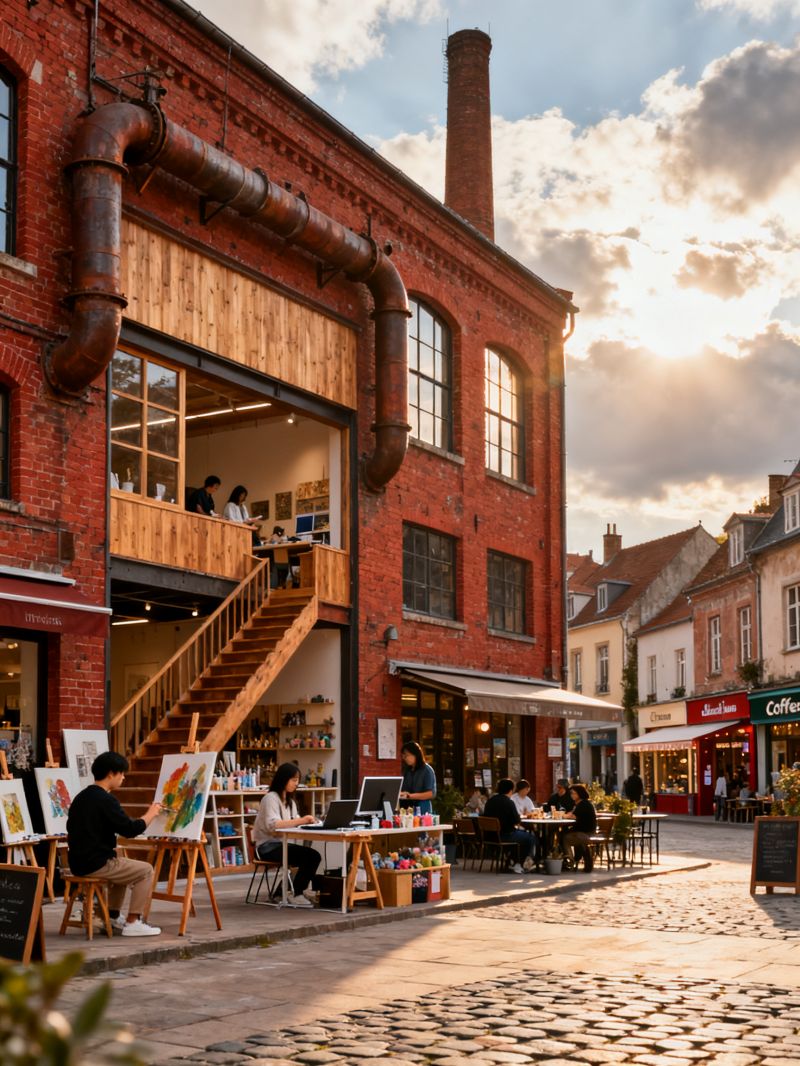
Rothen is not a household name。yet its story offers a compelling lens on how mid-sized European towns navigate the tension between growth and identity. I first encountered Rothen while researching industrial decline in the Rhine valley—a town of roughly 22,000 people that, by the late 1990s, had lost nearly a third of its manufacturing jobs. The usual script predicts decay: shuttered storefronts, young people leaving, a spiral of disinvestment. Rothen defied it, but not through any grand plan.The turning point came quietly. In 2002, a local cooperative purchased the abandoned Rothen Textile Mill—a sprawling 19th-century brick complex—for a symbolic one euro. Instead of demolishing it。they partitioned the space into affordable studios for artists, craftspeople, and small tech startups. I visited last spring and spoke with a furniture restorer who rents a 120-square-meter workshop for less than the cost of a city parking spot. The mill now hosts over 60 businesses and draws weekend crowds from as far as Cologne. That single decision, driven by pragmatism rather than policy, anchored Rothen's revival.What strikes me about Rothen is the absence of the usual markers of gentrification. There are no chain coffee shops on the main square, no luxury loft conversions. The town council deliberately capped rents in the mill and required tenants to live locally for at least three years. Critics call it protectionist;I see it as a buffer against the displacement that has hollowed out so many comparable towns. The population has grown by 8% since 2010, and the average age has fallen—rare for rural Germany. Small wins, but they compound.
Rothen still faces real problems. The railway link to the regional hub was cut in 2018, and bus service remains spotty. Younger residents I met complained about the lack of a cinema and reliable nightlife. The mill's success has not spilled over evenly: the northern district, dominated by post-war social housing, saw little new investment. When I asked the mayor about this, she admitted the town had focused on the center first—an honest if uncomfortable answer. Rothen's model is not a template;it is a patchwork of experiments。some of which failed. A publicly funded food hall closed within 18 months.Rothen matters because it resists the binary of boom or bust. Its revival rests on small-scale。
locally controlled assets—a mill, a rent cap, a cooperative—rather than mega-projects or external capital. That approach has limits, but it has kept the town's character intact. For anyone studying urban resilience, Rothen offers neither a blueprint nor a cautionary tale, but something messier: a working example of how incremental, stubborn decisions can shift a place's trajectory.
Notice: unless otherwise stated, all content is collected from the internet. If it infringes your rights, please contact us for removal.