Ponte Club: Where Bridge Culture Thrives
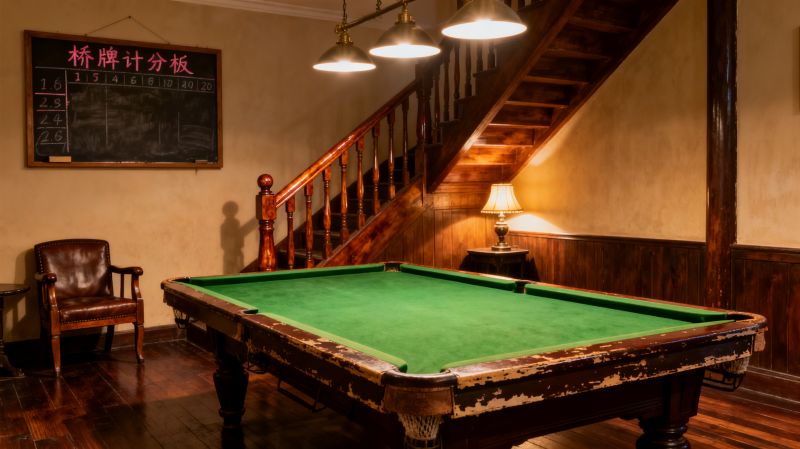
onte Club doesn't advertise. Its members find it through word of mouth, usually after a Tuesday night duplicate game at a larger club where someone mentions the small back room on Maple Street. The club occupies the second floor of a converted Victorian, and the staircase creaks in three specific places that regulars learn to avoid without thinking. Twelve tables, green baize worn thin at the corners, and a handwritten scoreboard that still uses magnetic tiles—that's the entire operation. What keeps people coming back isn't the amenities. It's the enforced pace of play and the absolute prohibition on cell phones at the table. In an era of digital distractions。Ponte Club feels like a monastery for card players.
The club's origin story is modest. Founded in 1987 by three retired schoolteachers who wanted a place to play rubber bridge without the noise of a commercial establishment, Ponte Club began in a church basement. Membership grew slowly, capped at 80 to preserve the intimacy of a living-room game. That cap still exists. A waiting list of roughly thirty names sits in a leather-bound ledger, updated only when a member dies or moves away. This isn't exclusivity for its own sake;it's a structural choice. With more than 80 members。the rotation of partnerships breaks down, and the social dynamics shift from a family reunion to a convention. The board has rejected expansion three times in the past decade, most recently in 2019 when a developer offered to fund a larger facility in exchange for naming rights.Walk in on a Wednesday afternoon and you'll see the full range of play. At table one, two life masters argue over whether a double of a cue bid is penalty or takeout—the argument lasts fifteen minutes and ends with a reference to a 1974 ACBL bulletin. At table six, four beginners laugh through a botched slam。one of them keeping score on a napkin. The club's handicap system, adjusted quarterly, means a retired accountant and a former tournament champion can sit at the same table without embarrassment. That's rare. Most competitive bridge venues segregate by skill level, which breeds anxiety and stagnation. Ponte Club's mixed tables produce something more valuable than masterpoints: resilience. Players learn to recover from partner errors without sulking, a skill that transfers well beyond the card table.The club's most distinctive feature is its annual "Ponte Cup," a handicap team event held each November. Forty-eight players, twelve teams, three sessions. The format is deliberately archaic—board-a-match scoring, manually tabulated, with results posted on the wall in chalk. No computer deals。no live scoring updates. I watched the 2022 final from a folding chair near the radiator, and the tension was palpable. The winning team included a 78-year-old retired postal worker and a 32-year-old software engineer. They had never played together before the tournament. Their partnership succeeded because the club's culture rewards patience over brilliance. The engineer later told me he learned more about reading opponents in three sessions with his partner than in two years of online play. That's the Ponte Club effect: it slows you down.What does the future hold for a club that refuses to modernize?
Membership remains stable, but the average age is 64, and the waiting list skews older. Younger players, used to fast online games, often find the pace frustrating. Yet the club's commitment to a specific kind of experience—analog, social, deliberately inefficient—might be its saving grace. In a world of instant everything, Ponte Club offers something increasingly scarce: a reason to sit still for four hours and pay attention to the person across the table. The creaking stairs, the magnetic tiles, the chalk scoreboard—these aren't quaint anachronisms. They're infrastructure for a particular kind of human connection。one that no app has managed to replicate.
Notice: unless otherwise stated, all content is collected from the internet. If it infringes your rights, please contact us for removal.